Thursday, 9 July 2026

Micro Budget, Mega Impact: How Low Cost Films Are Redefining Box Office Success in 2026

Technology, economics, and creator economy shifting global cinema away from blockbuster dominance.

For decades, Hollywood and global film industries like Bollywood operated on a simple, unshakable axiom: more money equals more magic. If you wanted a box office juggernaut, the recipe was non negotiable. You needed nine figure budgets, face card validating A list superstars, jaw dropping visual effects, and a multi million dollar marketing blitz that plastered your poster on everything.

But as we cruise through 2026, that legacy formula isn't just showing cracks, it is getting completely shattered.

An unexpected, scrappy contender has entered the chat: the micro budget film.

Across the global cinematic landscape, low cost productions are generating mind boggling returns on investment. They are capturing the cultural zeitgeist, hijacking our social feeds, and quietly outperforming heavily financed studio blockbusters that cost upwards of $200 million to produce. What used to be dismissed as a niche, indie sandbox for film festival purists has transformed into an absolute powerhouse within the mainstream entertainment economy.

This isn't just a temporary blip or a lucky streak, it is a fundamental, structural shift in how stories are greenlit, built, distributed, and consumed. We are witnessing the birth of a new era where creativity, community, and hyper targeted technology are democratizing the silver screen.

The Perfect Storm: Why the Budget Myth is Dying

How did we get here? The collapse of the traditional blockbuster monopoly didn’t happen overnight. Instead, it is the result of three massive cultural and technological shifts colliding at the perfect moment.

The Democratization of the Toolkit

The sheer cost of looking cinematic has plummeted to near zero. Historically, simply renting a Hollywood grade camera package and purchasing 35mm film stock could bankrupt an independent creator before day one of shooting.

In 2026, the playing field is radically level. High end digital sensors, hyper affordable anamorphic lenses, cloud based editing suites, and highly sophisticated virtual production tools have given small teams pristine, studio quality output for a fraction of the cost. Furthermore, generative AI tools have streamlined painstaking processes like high end rotoscoping, localized dubbing, background cleanup, and pre-visualization. A five person crew in a basement can now achieve visual polish that previously required an army of post production artists.

Radical Franchise Fatigue and The Craving for Authenticity

Let us be honest: audiences are tired of superhero sequels and uninspired live action remakes of animated classics. We are living in an era of acute franchise fatigue. Gen Z and millennial viewers, in particular, have spent their entire lives online surrounded by raw, unpolished, authentic content. They have a built in detector for corporate, sanitized artifice. When a studio drops a $250 million movie that feels like it was written by a committee of corporate brand managers, audiences tune out. Conversely, when a micro budget film takes massive creative risks, embraces unconventional structures, and speaks with a distinct, uncompromised human voice, viewers show up.

The Flawless Math of Low Risk, High Reward

The financial architecture of a mega blockbuster is terrifyingly fragile. If a movie costs $200 million to make and another $150 million to market, it needs to clear roughly half a billion dollars globally just to break even after theater chains take their cut. A single underperforming opening weekend can genuinely sink a studio's fiscal year.

Micro budget films play an entirely different economic game. When your production budget is tucked neatly under $1 million or a few crores, the path to profitability is incredibly wide. You do not need a historic, record shattering global opening. A modest theatrical run, supplemented by quick Premium Video on Demand (PVOD) windows, international streaming licensing, and digital rentals, can easily yield a 10x or 20x return on investment.

Case Study of Obsession (2026): The Supernatural Pivot Point

If you want to understand the exact mechanics of this revolution, look no further than Obsession, the supernatural horror feature that completely upended the film industry earlier this year.

Directed by first time filmmaker Curry Barker, Obsession was produced for a jaw droppingly lean $750,000. It featured zero household names, relied almost exclusively on practical effects, and was shot with an incredibly small, agile crew. The narrative traded expensive, CGI heavy spectacles for unbearable psychological tension, brilliant sound design, and atmospheric dread.

The result? By mid 2026, Obsession crossed a staggering $230 million worldwide.

The industry took immediate notice. Focus Features bought the distribution rights for $15 million, teaming up with Blumhouse Productions, the undisputed masters of low budget, high concept horror, to scale the marketing. It quickly became the highest grossing title in Focus Features’ history.

Beyond its massive theatrical box office run, the film became an absolute monster on PVOD platforms and streaming services. Millions of fans who missed it in theaters rented it at home, driven by an unstoppable wave of digital hype and social media virality.

However, Obsession also highlighted an important, ongoing conversation within modern cinema, profit participation. While the film's financial backers and executive producers became overnight multi millionaires, many ground level crew members were paid standard indie day rates without back end percentages. As micro budget films continue to dominate, rewriting compensation models to ensure the creative crew shares in these historic windfalls is becoming a critical talking point for the future of independent cinema.

Critical Takeaways from Obsession

Genre is an ROI Cheat Code: Horror and supernatural thrillers remain the ultimate playground for micro budget creators. Suspense, fear, and clever concepts rely on pacing and atmosphere, elements that cost nothing to write but pay off massively on screen.

Strategic Distribution Alliances Matter: A great micro budget film can absolutely find a cult following on its own, but pairing a raw, brilliant indie film with a powerhouse distributor like Blumhouse or Focus Features can pour rocket fuel on its commercial reach.

The Cultural Conversation has Shifted: Audiences no longer check a movie's price tag before buying a ticket. If the concept goes viral, the budget becomes entirely irrelevant.

The Micro Budget Ancestry: A History of Flipping the Script

While 2026 feels like a definitive turning point, it is built on a brilliant legacy of historical disrupters who proved that a great story, executed beautifully, can conquer the world.

Film

Estimated Budget

Global Box Office

The Secret Sauce

The Blair Witch Project (1999)

~$60,000

$248 Million

Pioneered viral internet marketing; used mockumentary realism to convince audiences it was real.

Paranormal Activity (2007)

~$15,000

$193 Million

Shot on security cameras in a single home; weaponized what you do not see.

Skinamarink (2022)

~$15,000

$2 Million+

Lo fi experimental horror that leveraged TikTok and Reddit communities to drive curiosity.

Terrifier 3 (2024)

~$2 Million

$90 Million+

Bypassed standard Hollywood systems entirely by building a hyper loyal underground fandom.


The Indian Revolution: Content Completely Dethroning Star Power

While Hollywood is grappling with the micro budget shift, the Indian film ecosystem is undergoing an even more dramatic transformation. For decades, the Indian box office was completely gatekept by a handful of legendary acting dynasties and mega studios. If your movie didn't feature an ultra famous, larger than life superstar or an astronomical budget for gravity defying action sequences, getting a wide theatrical release was an uphill battle.

Not anymore. Indian audiences in 2026 are actively rewarding brilliant, grounded writing over raw star power. Look at how these recent releases completely subverted expectations:

12th Fail

Estimated Budget:  ₹20 Crore

Worldwide Gross:  Around ₹70 Crore

The Magic:  Starring Vikrant Massey, who was not a mainstream box office star at the time. The film succeeded almost entirely because of positive audience reviews, student communities, social media recommendations, and relentless word of mouth publicity. It became one of India's biggest sleeper hits and demonstrated that educational, inspirational stories could thrive theatrically.

Manjummel Boys

Budget:  Approximately ₹20 Crore

Worldwide Gross:  More than ₹240 Crore

The Magic:  This Malayalam film featured no pan Indian superstars. Its success spread organically through audience recommendations, viral clips, and outstandingly strong storytelling, eventually making it one of the highest grossing Malayalam films ever.

Premalu

Budget:  Around ₹9 Crore

Worldwide Gross:  Over ₹130 Crore

The Magic:  Featuring young actors rather than established stars, Premalu became a surprise blockbuster. It demonstrated that relatable stories, strong writing, and intense social media buzz can easily outperform expensive commercial entertainers.

Laapataa Ladies

Estimated Budget:  Approximately ₹5 to 10 Crore

Global Reach:  Significant theatrical success followed by widespread streaming popularity.

The Magic:  Produced by Aamir Khan and directed by Kiran Rao, Laapataa Ladies relied on strong writing, relatable characters, and sharp social commentary rather than superstar driven marketing. The film gained momentum through positive audience reviews and digital word of mouth, eventually becoming one of the most discussed Indian films of the year.

Consider films like Munjya (budget of ₹25 to 30 crore, grossed over ₹130 crore), which bypassed A list actors entirely to focus on localized folklore and humor, or the Gujarati devotional phenomenon Laalo Krishna Sada Sahaayate (produced for a mere ₹50 Lakhs, grossing an unbelievable ₹75 Crore). Even the independent feature Little Hearts, crafted on a modest budget of ₹2.4 Crore by a young engineer who walked away from a corporate job, went on to capture over ₹40 Crore globally.

The message from Indian moviegoers is loud, clear, and undeniable: Give us an incredible story that moves us, or we will stay home.

Welcome to Creator Economy Cinema (CEC)

This shift isn't just about smaller bank accounts; it represents a profound structural evolution in who gets to be a filmmaker. We are transitioning away from the traditional, gatekept media landscape into a brand new paradigm: Creator Economy Cinema (CEC).

Defining Creator Economy Cinema (CEC)
Creator Economy Cinema refers to films developed, funded, and promoted primarily through creator led ecosystems, digital communities, social media engagement, and audience participation, rather than relying on traditional studio backing, legacy star power, or massive institutional marketing budgets.

The Five Pillars of Creator Economy Cinema

Community Over Celebrity:  A dedicated, highly engaged digital community that trusts a creator's artistic vision will always beat a passive audience drawn in purely by a famous face on a poster.

Storytelling Over Spectacle:  When you lack the funds to blow up a bridge or animate a dragon, you are forced to write brilliant dialogue, complex characters, and tight, compelling pacing.

Algorithms Over Advertising:  Modern marketing is won on the digital battlefield. A film that naturally spawns viral trends, organic reaction videos, and algorithmic love on TikTok or Instagram will easily outrun a boring, multi million dollar traditional television ad campaign.

Engagement Over Exposure:  It is infinitely better to have 100,000 passionate, vocal superfans talking about your film online than 5 million people glance passively at a billboard while stuck in traffic.

Authenticity Over Branding:  Audiences can sense corporate calculation from a mile away. Low budget, creator driven cinema thrives because it retains its raw, unfiltered, human perspective.

What the Future Holds: A More Balanced Creative Universe

Does the meteoric rise of micro budget cinema mean the death of the summer blockbuster? Absolutely not. There will always be a place in our cultural diet for massive, communal, high spectacle theatrical events. Films that fully leverage the scale of IMAX sound systems and massive screens will continue to hold a vital place in the global entertainment ecosystem.

Instead, what we are entering is a far more beautiful, balanced, and competitive creative universe. Financial scale is no longer the sole gatekeeper of cultural relevance. The playing field has been completely disrupted.

For aspiring filmmakers, bedroom writers, digital content creators, and independent artists worldwide, the lesson of 2026 is incredibly liberating: Stop waiting for permission. You do not need a multi million dollar studio deal or a connection to a Hollywood or Bollywood dynasty to make a movie that captures the heart of the world.

If you have a smartphone, a laptop, a unique perspective, and a story that demands to be told, the global audience is waiting for you with a single click. The next historic box office phenomenon won't be defined by how much money was spent on it, it will be defined by how deeply it connects with the human beings watching it.


Wednesday, 24 June 2026

Rise of Dopamine Sites In The Burnout Economy

The Strange Psychology of Shopping for Things You'll Never Receive

A young professional sits alone in a small apartment after another exhausting workday. She opens a food-delivery app, scrolls through menus, selects her favourite meal, customizes every item, proceeds to checkout and then closes the app.

No food arrives.

No money is spent.

Yet she feels better.

This increasingly common behaviour is driving the rise of "dopamine sites," a new category of digital platforms that allow users to experience the emotional rewards of shopping, ordering, and consuming without ever completing a purchase.

At first glance, the trend seems bizarre. But taking a closer look, it reveals something profound about modern life. We are living in a burnout economy, where even the anticipation of pleasure has become a substitute for pleasure itself.

When news reports from South Korea first began describing websites where people could order food that would never be delivered, many readers reacted with disbelief.

 Why would anyone spend time choosing a meal they would never eat?

Why browse products that would never arrive at their doorstep?

Why go through the motions of shopping without actually buying anything?

The more I read about the phenomenon, however, the less strange it seemed. In fact, most of us have probably done some version of it already.

Think about the last time you filled an online shopping cart and then abandoned it. Or spent twenty minutes browsing restaurant menus before deciding to eat whatever was already in the fridge. Maybe you've saved holiday destinations on Instagram, built wish lists on Amazon, or spent an evening looking at apartments you have no immediate plans to rent or purchase.

Nothing was purchased. Nothing changed. And yet the experience wasn't entirely pointless. For a few moments, you were imagining possibilities. That, it turns out, may be the real appeal of dopamine sites.

Perhaps the popularity of dopamine sites should not surprise us at all. For years, social media has trained us to derive pleasure from experiences that are not our own. Before we dismiss dopamine sites as an odd digital curiosity, it is worth considering how much of our online lives already revolve around similar behaviours. Every day, millions of people scroll through Instagram, YouTube, Pinterest, and other social platforms consuming images of designer clothing, luxury homes, exotic vacations, gourmet meals, perfectly sculpted physiques, and lifestyles they may never experience firsthand. Most are not actively planning to buy the dress, book the holiday, drive the sports car, or become a fitness influencer. Yet they continue scrolling through photographs of luxury resorts they may never visit, admire homes they may never live in, save recipes they may never cook, and watch reviews of products they have no intention of buying. The experience itself is pleasurable. Yet they continue scrolling because the experience itself is pleasurable. For a few moments, they are transported into a world of possibilities, aspirations, and imagined futures. The satisfaction comes not from ownership but from imagination.

Thus we enjoy the possibility of the experience, the brief moment of mentally placing ourselves inside a different life. Seen through this lens, dopamine sites are less a radical innovation than an evolution of a habit many of us already practice every day. They transform passive aspiration into active participation, allowing people to engage with the emotional rewards of consumption without the financial cost of consumption itself.

In this sense, dopamine sites may not represent an entirely new phenomenon. Rather, they may be the logical next step in a digital culture that has increasingly blurred the line between consuming things and consuming the idea of things. What social media does through observation, dopamine sites do through participation, they allow users not merely to look at the fantasy, but to briefly step inside it.

More Than a South Korean Trend

The term "dopamine sites" has emerged from South Korea, where young people facing rising living costs, demanding work cultures, and increasing social pressures have begun turning to platforms that simulate the experience of consumption.

Some sites allow users to assemble elaborate food orders that never reach a restaurant. Others let visitors take virtual smoke breaks, browse products, fill carts and experience much of the emotional journey of shopping without ever completing a transaction.

The trend has attracted international attention partly because it seems so counterintuitive. We tend to assume that the satisfaction comes from receiving the product. But psychologists have long known that anticipation plays a much bigger role in human happiness than we often realize. The excitement before a holiday, the countdown to a concert, the expectation of a package arriving tomorrow, these moments carry their own emotional charge. Sometimes the anticipation can feel almost as rewarding as the event itself.

In a world where many pleasures are becoming more expensive, harder to access, or squeezed into increasingly busy schedules, perhaps it is not surprising that people are learning to enjoy the anticipation on its own.

Living in the Burnout Economy

The popularity of dopamine sites says as much about society as it does about technology. Across many countries, younger generations are navigating a difficult combination of pressures. Housing costs continue to rise. Job markets feel increasingly uncertain. Social media exposes people to a constant stream of lifestyles, experiences, and achievements against which they inevitably compare their own lives. At the same time, work has followed us everywhere.

The smartphone was supposed to make life more convenient. In many ways it has. But it has also blurred the boundaries between work and rest, productivity and leisure, connection and obligation.

Many people finish their workday physically at home but mentally still at work. This is where the idea of a "burnout economy" becomes useful. We often think of burnout as an individual problem, a personal inability to manage stress. But increasingly it looks like a social condition. People are tired, not simply because they are working hard, but because modern life demands constant attention. Every notification, email, message, update, and recommendation competes for mental space. Against that backdrop, dopamine sites begin to make more sense. They offer something small, predictable, and comforting. Not a solution to stress, not even an escape from it but just a brief moment where imagining something pleasant feels good enough.

Why This Matters Beyond South Korea

It would be easy to dismiss dopamine sites as a uniquely South Korean phenomenon, but that would miss the bigger picture. The underlying behaviour is already everywhere.

Streaming platforms encourage us to spend as much time browsing as watching. Shopping apps make wish-list creation effortless. Food-delivery platforms know that many users will browse menus without ordering. Social media feeds are built around endless possibilities, the next video, the next post, the next recommendation.

In a sense, modern digital life increasingly revolves around anticipation. The next thing always feels just one swipe away.

What South Korea has done is make this dynamic visible. The rest of us have been participating in it for years.

Could India Be Next?

India may not yet have dedicated dopamine sites attracting headlines, but many of the ingredients are already present.

In fact, one could argue that India is already experiencing a softer version of the dopamine-site phenomenon. The platforms may be different, but the underlying behaviour is familiar. Millions of Indians spend hours browsing products, travel destinations, restaurants, gadgets, homes, fashion trends, and lifestyles with no immediate intention of purchasing them. The emotional reward comes from possibility rather than possession.

The country has one of the world's largest digital populations. Affordable mobile data and widespread smartphone adoption have brought millions of people online over the past decade. E-commerce, food delivery, gaming, and short-video platforms have become part of everyday life for a significant portion of the population. 

More importantly, India is experiencing a profound shift in aspirations. A college student in Jaipur, a software engineer in Bengaluru, and a small-business owner in Lucknow, all can scroll through the same stream of global lifestyles, luxury products, travel experiences, and success stories.

The distance between aspiration and reality has never been more visible. That does not necessarily create frustration. Often it creates imagination. People browse, save, compare, and dream.

In many ways, the emotional logic behind dopamine sites already exists within Indian digital culture. It is visible in wish lists that stretch for pages, carts filled during sales events, and countless hours spent exploring possibilities that may never become purchases.

Whether India develops its own version of dopamine sites remains to be seen. But the conditions that made them attractive elsewhere are certainly not absent.

A Mirror Held Up to Modern Life

What fascinates me most about dopamine sites is that they challenge a basic assumption about consumption. We tend to think people want products. But perhaps what many people really want is the feeling associated with those products, the hope, excitement, comfort, and possibility they represent. A new phone is not just a phone, a holiday is not just a holiday, a food order is not just a meal, each carries a small story about who we are, who we hope to become, or how we want to feel.

Dopamine sites strip away the product and leave the emotion behind. That may sound strange, but it is also revealing. Because when millions of people find comfort in simulated experiences, it suggests that what they are seeking is not consumption itself., it is relief.

And in an age overwhelmed by overstimulation, uncertainty, economic pressure, and chronic exhaustion, relief may be one of the most valuable commodities of all. Perhaps that is the real indicator of dopamine sites. They are not selling products, meals, or experiences. They are selling a brief escape into possibility. And the fact that so many people find comfort there tells us as much about the state of modern society as it does about the technology itself.

Wednesday, 8 April 2026

A Parallel Battlefield - Fake News, AI Manipulation and the Media War Around the US-Israel and Iran Conflict


As tensions escalate between the United States, Israel, and Iran, the conflict is being fought on more than just physical frontlines. A parallel battle is unfolding across television screens and social media feeds, driven by misinformation, amplified by artificial intelligence, and sustained by the economics of attention.

In today’s media landscape, war coverage is no longer confined to reporting facts. It increasingly resembles a performance. Flashing graphics, animated missile strikes, countdown clocks, and dramatic sound effects create an atmosphere closer to a battlefield simulation than a newsroom. This spectacle is not accidental. It is shaped by the race for viewership, where higher engagement directly translates into greater advertising revenue. In such an environment, intensity often takes precedence over accuracy.

The consequences are already visible. Misinformation is no longer limited to obscure corners of the internet, it frequently enters mainstream discourse too. There have been instances where viral videos, later proven to be false, were aired or discussed as credible developments. When visuals are dramatic enough, verification can become secondary, allowing false narratives to gain legitimacy before they are questioned. The pressure to attract audiences means that noise often replaces nuance, and urgency replaces careful reporting.

The rise of artificial intelligence has deepened this crisis. AI generated images, videos, and audio clips now possess a level of realism that makes them difficult to distinguish from authentic material. Deepfakes can simulate political leaders issuing statements, fabricate battlefield footage, or recreate events that never occurred. In a conflict already charged with emotion and uncertainty, such content can easily manipulate public perception and intensify reactions.

Social media platforms act as powerful accelerators in this process. Viral content, that provokes strong reactions such as fear, anger, or outrage, ensuring that sensational and misleading posts travel faster and farther than carefully verified reports. A single piece of fabricated content can reach millions within hours, shaping narratives before corrections have a chance to catch up.

Underlying all of this is a structural issue. The metrics used to measure audience engagement prioritize popularity over credibility. Whether through television ratings or digital engagement statistics, the system incentivizes spectacle and speed. The result is an information environment where truth struggles to compete with virality.

In this evolving landscape, the US Israel Iran conflict is not just a geopolitical struggle but also a contest over perception. In an age where artificial intelligence and media economics intersect, controlling the narrative can be as critical as controlling territory.


Thursday, 2 January 2025

Audio Steganography: The Art of Concealing Messages in Music


Spotify Widget
Listen on Spotify
Imagine listening to your favorite rock song, only to discover that it carries a secret hidden message. Being a hard core rock fan, this topic has always intrigued me since it is much talked about in the rock circuit, so brought it into discussion. It is not some conspiracy theory but a fascinating technique known as audio steganography. Steganography is an ancient art which the musicians have been experementing in their music productions.

Audio steganography does stand as a testament to the limitless creativity of human minds. By amulgamating art, science and mystery, it awes its listeners beyond the surface and unravels the hidden layers within. As technology continues to evolve, so too will the methods and applications of this fascinating craft, ensuring that the art of concealing messages in music remains as compelling as ever.

Roots of Steganography

Steganography, the practice of hiding messages within other media, dates back centuries. Ancient Greek spies tattooed messages on shaved heads, later concealed by regrown hair. Invisible ink, microdots, and null ciphers all found their place in history’s covert communication toolkit. While these methods relied on physical media, today’s musicians have taken this clandestine tradition into the digital realm.

Hiding Messages in Music

Music has long been a medium for coded messages. From classical composers embedding their names in melodies to rock bands reversing audio tracks, the blend of creativity and secrecy has captivated audiences. At the heart of modern audio steganography lies backmasking, a technique where messages are recorded in reverse and layered into songs. These hidden gems remain inaudible until the audio is reversed, often using specialized software.

Take The Beatles, for instance. Their song “Rain” is often cited as the first intentional use of backward audio in popular music. Similarly, Pink Floyd and Electric Light Orchestra inserted playful backmasked messages in their tracks, teasing curious fans. On the darker side, claims of satanic messages in Led Zeppelin’s “Stairway to Heaven” stirred public controversy, though most were later debunked as unintentional coincidences.

Techniques
  • Backmasking: when the music is played backwards is just one of the ways of audio steganographer.
  • Musical Ciphers: Composers like J.S. Bach encoded names and words using note sequences, a practice dating back to the 1400s.

  • Frequency Manipulation: Adjusting specific sound frequencies to embed messages, detectable only through detailed audio analysis.

  • Echo and Reverb Manipulation: Creating hidden messages using subtle sound effects.

  • Hiding Images in Audio: Converting images into sound signals and embedding them within tracks.

  • Tempo and Note Modulation: Concealing messages by altering tempos or modifying harmonies without disrupting the music’s flow.

Why Do It?

The motivations behind audio steganography are varied. For some musicians, it is a playful experiment, a creative Easter egg for fans to uncover. For others, it is a way to make artistic statements or even communicate covertly. The 20th-century musique concrète movement, for instance, used reversed and fragmented audio to create avant-garde compositions.

The Cultural Fascination

Hidden messages in music have sparked fascination, debate as fear in certain cases. Aleister Crowley, a prominent occult figure, once advocated listening to records backward as a way to train the mind. This idea found an unlikely echo in the paranoia of the 1980s, when U.S. congressional hearings debated the supposed satanic influence of backmasked rock songs.

The Digital Age

In the digital era, audio steganography has become even more accessible. Software like Audition, Pro Tools and Tidal Cycles offer intuitive interfaces for reversing audio, adjusting frequencies, layering and  spectral frequency display which can be used for seamlessly hiding messages into music and its extracted with precision, thus expanding the creative possibilities for modern artists. Now use of artificial intelligence has further expanded the possibilities. AI can analyze music for hidden patterns or even generate steganographic content autonomously. This opens new frontiers for creativity, allowing artists to craft multi-layered pieces where the hidden message evolves with each playback, adapting to listener behavior or environmental factors.

Beyond individual creativity, the digital age has also amplified the cultural impact of audio steganography. Social media platforms and online forums provide spaces for fans to share discoveries and theories, turning hidden messages into global phenomena. Viral challenges and collaborative decoding efforts have brought audio steganography into the mainstream, demonstrating its enduring appeal.

A Timeless Craft

Audio steganography blurs the lines between art, technology and mystery. From ancient tattooed messages to digital backmasked tracks, it underscores human fascination with secrecy and discovery. Whether in a playful experimentation or subversive storytelling, hidden messages in music invite us to listen closely because what we hear might not only be the thing what is truly there.

Audio steganography is not merely a relic of the past; it is a craft that has continuously evolved. From ancient methods like wax tablets and tattooed messages to today’s sophisticated digital tools, the core principle remains the same, that is to embed a hidden layer of meaning within the medium.

The Psychological Appeal

Part of the allure of audio steganography lies in its psychological impact. Humans are naturally drawn to mystery and the thrill of uncovering hidden truths. The act of discovering a concealed message in a favorite song can forge a deeper connection between the listener and the artist, fostering a sense of exclusivity and intrigue.

Some Use Cases

The impact of audio steganography extends beyond music into popular culture. Movies, video games, and even podcasts have employed this technique to engage audiences.

Film directors like Alfred Hitchcock and Stanley Kubrick employed subtle sound cues to convey hidden messages, adding layers of meaning to their storytelling. More recently, films like Christopher Nolan’s Inception and Jordan Peele’s Us have utilized audio steganography to create immersive soundscapes that challenge audiences to listen closely and interpret underlying themes.

Video game developers have hidden clues in soundtracks, encouraging players to analyze audio files to unlock secrets. Games like Bioshock and The Last of Us refered to as poetic gameplay have used this technique to deepen the narrative experience, rewarding attentive players with exclusive content or alternate storylines.

Podcasts, as an auditory medium, are also exploring the potential of audio steganography. Podcasters experimented with embedding secret messages, creating interactive experiences for their audiences. Some Mystery-themed podcasts, as reported, have also used this technique, perhaps inviting listeners to decode hidden content and participate in the storytelling process.

Ethical Considerations

While audio steganography is often employed for artistic or playful purposes, it also raises ethical questions. Should artists disclose the presence of hidden messages? What happens when such messages are misinterpreted? These questions underscore the responsibility that comes with wielding this powerful tool.

As technology evolves, so too do the methods and applications of audio steganography. The integration of virtual and augmented reality, for instance, could add new dimensions to this art form, creating immersive experiences where hidden messages are not just heard but felt and seen.

Wednesday, 1 January 2025

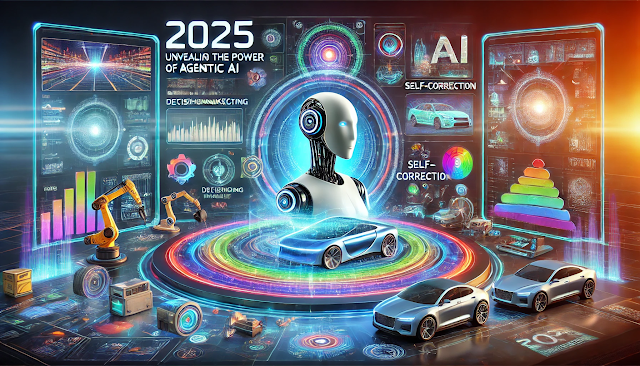
Agentic AI and Future of Technology: Building Smarter, Faster and Ethical Societies


Christopher Nolan's sci-fi movie TENET tried to describe in several ways about the potential of super intelligent algorithms. As we step into 2025 today, do we get to see the algorithmic nuances of Agentic AI unfold in its full potential this year?

I have been following tech for quite sometime now, found Agentic AI one of the most exciting and transformative trends in the AI landscape. Unlike traditional AI, which reacts to specific prompts, Agentic AI can act independently, breaking down complex tasks into manageable steps, making decisions and even learning from its mistakes. It is highly developed which tends to replicate human decision-making as closely as possible.

Imagine an AI system analyzing a news piece. Instead of just processing the text, it also examines accompanying images, videos and social media conversations. This holistic approach enables a richer, more nuanced understanding of the subject. Also, doing a sentiment analysis in auto pilot while personalizing news content, and on the other hand detecting fake news.

Or imagine you’re a lawyer working on a complex case. Instead of manually reviewing hundreds of documents, you could use an agentic AI system to analyze precedents, draft clauses and simulate negotiation scenarios. This AI doesn’t just follow instructions, it adapts, plans and refines its output based on real-time feedback.

Also imagine AI chatbots analyzing not just a customer’s words but also their tone, facial expressions, and past interactions to provide better support. Visual AI could enable applications like generating realistic 3D environments from sketches or creating tailored fashion designs based on individual preferences. These advancements have already started and promise to revolutionize industries from entertainment to retail.

Artificial Intelligence is no longer confined to sci-fi movies or the labs of the top tech companies. It is now actually getting all around us and seeping in into our day-to-day workflow. It is changing the way we interact with media, simplifying tasks, transforming industries and shaping the way we live. Everyday, I come across news about groundbreaking AI developments, from more efficient algorithms to applications that can write, draw and even compose music. And behind these mind-boggling innovations lies a structured ecosystem that makes this possible which we all need to understand and draw lines for its ethical practices for a sustainable society.

To take the discusion forward, Agentic AI refers to artificial intelligence systems designed to act autonomously and take self initiative in performing tasks, making decisions and achieving goals. Unlike reactive AI, which only responds to specific inputs or instructions, agentic AI is proactive, capable of adapting to new situations, and making decisions based on its understanding of the environment. Some examples of Agentic AI are Self-Driving Cars which make decisions about navigation, traffic and safety without real-time human input, Chatbots with Decision Capabilities which can escalate customer issues to appropriate departments or solve problems autonomously, then AI in Robotics includes machines capable of performing complex tasks like assembling products or exploring in hazardous environments.

The key breakthroughs driving Agentic AI is its ability to "reflect." These systems can analyze their own actions, identify errors and improve over time. For instance, an AI writing code can test its output, find bugs and rewrite problematic sections without human intervention. While this isn’t 'self-awareness' in the human sense, but it represents a significant step toward self-improvement in machines. The term Agentic AI should not be confused with the term AI Agents.

Key characteristics of Agentic AI

Autonomy: Operates independently without constant human oversight.

Goal-Driven: Designed to pursue specific objectives or tasks.

Learning Ability: Adapts to new situations through machine learning and other AI techniques.

Decision-Making: Assesses and selects actions based on available data, often weighing trade-offs.

Proactivity: Anticipates needs or changes and acts accordingly, rather than waiting for explicit instructions.

How does Agentic AI compare to unsupervised learning?

Agentic AI and unsupervised learning are distinct yet interconnected concepts in the field of artificial intelligence, with differences in purpose, autonomy, proactivity, decision-making, and their relationship. Agentic AI refers to systems designed to act autonomously, making proactive decisions to achieve specific goals. It emphasizes agency—the ability to make decisions and take actions independently of human intervention. On the other hand, unsupervised learning is a machine learning paradigm that identifies patterns and relationships in data without requiring labeled outputs. Its primary focus is on discovering hidden structures or clustering data points, making it a tool for learning rather than autonomous action.

In terms of autonomy and learning, Agentic AI operates by relying on learned or programmed decision-making processes to function in real-world scenarios. It often integrates multiple learning paradigms, such as supervised, unsupervised, and reinforcement learning, to adapt and perform tasks. For example, a self-driving car uses environmental data to decide when to stop, turn, or accelerate. Unsupervised learning, however, is not inherently autonomous. It specializes in finding patterns or features in data and is often employed to pre-train models or provide insights that can later be used by systems like Agentic AI. An example would be an unsupervised algorithm that identifies clusters of traffic patterns without deciding how a vehicle should navigate them.

When it comes to proactivity, Agentic AI stands out as goal-oriented and proactive. It applies learned knowledge to make decisions and perform tasks actively, such as a recommendation engine that updates its suggestions dynamically based on user behavior. In contrast, unsupervised learning is passive and focused on discovery. While it excels at identifying patterns, such as clustering similar user profiles, it requires further integration with decision-making systems to act on these insights, such as selecting which content to display to users.

Agentic AI also involves a robust decision-making layer that combines learning with reasoning. For instance, a chatbot powered by Agentic AI uses real-time data to decide how to interact with users effectively. Unsupervised learning, in comparison, provides insights rather than directly making decisions. An example would be an unsupervised model grouping similar news articles without determining which one to display to a reader.

Despite these differences, unsupervised learning can play a foundational role in enabling Agentic AI. During the training phase, Agentic AI may leverage unsupervised learning to cluster data or reduce dimensionality, which enhances its understanding of the environment. In the action phase, Agentic AI uses these insights to make autonomous decisions and perform tasks, showcasing how the two paradigms can complement each other in practical applications.

Applications

Agentic AI has immense potential to transform everyday life for the common man by automating complex tasks, simplifying decision-making and enhancing productivity.

Here are some applications and how it can be useful across various aspects of daily life:

1. Personal Assistants
2. Simplifying Routine Tasks
3. Enhancing Productivity
4. Empowering Financial Decisions
5. Improving Healthcare Access
6. Supporting Small Businesses
7. Making Travel More Convenient
8. Creativity and Content Creation
9. Personalized Problem-Solving
10. Media and Marketing
11. Boosting Creativity
12. Entertainment and Leisure
13. Legal and Administrative Work
14. Accessibility and Inclusivity
15. Environmental and Social Impact

The AI Stack: The Foundation of Innovation

To understand where AI is heading, it’s essential to know where it’s coming from. Think of the AI stack as a metaphorical house that enables all AI functionalities. Like any house, it has three critical components - the foundation, the structure and the brain.

Foundation: The Hardware

The hardware is the bedrock of the AI stack. Companies like NVIDIA and Google have developed GPUs (Graphics Processing Units) and TPUs (Tensor Processing Units) that can process enormous amounts of data at breakneck speeds. These high-performance processors are the engines that power AI systems, enabling them to perform tasks like natural language processing and image recognition.

Structure: Cloud Infrastructure

Once the hardware is in place, you need the right environment to connect and scale it. That’s where cloud platforms like AWS, Azure, and Google Cloud come in. These services offer the tools, scalability, and global reach required to manage and deploy AI systems efficiently. Cloud infrastructure is what makes AI accessible—not just to tech giants but to smaller developers and researchers around the world.

Brain: Foundation Models

At the top of the AI stack are the foundation models—massive, pre-trained systems like OpenAI’s GPT-4, Google’s Gemini, and Meta’s Llama 2. These models are trained on diverse datasets, absorbing knowledge from text, images, code, and more. They serve as the "brains" of AI applications, enabling a wide range of capabilities from generating human-like text to creating hyper-realistic images.

Balancing Innovation and Responsibility

The rapid evolution of AI, from the structured AI stack to agentic, visual, and multimodal systems, is transforming the world at an unprecedented pace. However, this progress must be tempered with responsibility.

As AI becomes more powerful, we must ensure it serves humanity’s best interests, enhancing creativity, solving complex problems and improving quality of life without creating inequalities or ethical dilemmas.

The rise of agentic AI represents a pivotal moment in this journey. By giving machines the ability to plan, adapt, and learn, we are opening doors to possibilities once thought impossible. But with this power comes a shared responsibility to design, deploy and use AI systems that are not just intelligent but also ethical and fair.


Sunday, 29 December 2024

The AI Secret Behind Seamless Animations and Lifelike Videos


In today’s digital world, where AI-generated videos, animations and virtual experiences are increasingly blurring the line between real and artificial, it is natural to come to mind, How does it all look so real? From such realistic deepfake videos to smooth animations that sync perfectly with emotions, there is a technology that work behind to produce it. It is the AI framework known as the Temporal Gaussian Hierarchy (TGH). While the name might sound technical, its impact is visible in everyday tools we use for creating, editing and sharing media. Whether it is the lifelike lip-syncing of an animated character, the fluid transition of video frames or the realistic progression of a virtual sunset, TGH is making these experiences seamless and visually stunning.

Whether you're a social media enthusiast, a content creator, or just someone exploring digital tools for fun, TGH-powered applications can elevate your online activities. These technologies make it easier than ever to produce professional looking content, tell compelling stories and experiment with creative ideas, that too without technical expertise. The future of AI isn't just for researchers and developers, it's for everyone.

Understanding TGH is crutial in the present AI landscape, how it’s powering everything from generative video apps, lifelike videos and animations to immersive AR/VR environments and  predictive modeling. Its applications are vast and transformative. These tools are not just for developers and filmmakers but are accessible to anyone looking to create professional-quality animations and videos.

By capturing temporal dependencies across multiple scales, TGH enables AI to create outputs that are not only detailed but also coherent over time. In the fast-paced world of generative AI, where realism and consistency are paramount, THG has emerged as a powerful framework.

This discussion delves into the concept, applications and the transformative role of THG in the generative AI landscape and for a layperson like me to understand the concept.

To begin with TGH is part of generative AI frameworks and is particularly relevant in areas of computer vision and machine learning. It is often used in systems designed for:

Video Generation: Creating smooth and realistic animations by managing temporal coherence between frames.

Image Synthesis: Ensuring consistency across multiple images in time-based sequences, such as morphing or style transfer.

Motion Analysis: Interpreting and predicting motion in AI models for applications like augmented reality (AR), virtual reality (VR), and gaming.

In the broader sense, TGH is part of the temporal modeling techniques in AI, where time-based data, like video or sequential frames are analyzed and generated. It integrates into neural network architectures for generative tasks, such as autoencoders, GANs - Generative Adversarial Networks, or diffusion models, enabling them to work with temporal sequences smoothly.

Temporal Gaussian Hierarchy

Break-up of the term:

  1. Temporal: Refers to time-based data or sequences where changes occur over time, like frames in a video, speech or even actions in a game.
  2. Gaussian: A Gaussian (or normal) distribution is a mathematical function that models data with a predictable pattern, such as the likelihood of a specific temperature on a given day. It's characterized by a mean (center value) and variance (spread or uncertainty).
  3. Hierarchy: A system of layers, where each layer represents a different level of detail or scale.

When combined, Temporal Gaussian Hierarchy is a framework that models sequential data across multiple layers. Each layer captures patterns at a different temporal scale:

Lower layers focus on short-term, fine-grained details (e.g., a flickering light in a video).
Higher layers capture long-term trends or broader patterns (e.g., the transition from day to night).

The hierarchical structure allows TGH to balance intricate details with overarching trends, making it ideal for generative tasks where time consistency and realism are critical.

How Temporal Gaussian Hierarchy Works

Key Principles
  1. Gaussian Modeling:
    Each layer in the hierarchy uses Gaussian distributions to model uncertainties or variations in the data. This helps in capturing natural variability without being overly deterministic.

  2. Temporal Dependencies:
    Temporal data often has dependencies—what happens now can influence what happens next. TGH captures these dependencies across multiple time scales, ensuring both short-term coherence and long-term consistency.

  3. Hierarchical Structure:
    The system operates in layers:
    • Coarse layers: Focus on larger patterns, like the movement of objects across a scene.
    • Fine layers: Handle minute changes, such as pixel-level variations in video frames.
  4. Information Flow:
    Information flows between layers, enabling lower layers to influence broader patterns and higher layers to guide finer details. This bi-directional flow ensures the final output is coherent and realistic.

Applications of Temporal Gaussian Hierarchy

Following are some applications:

1. Video Generation

Generative AI tools like Runway, Meta's Make-A-Video and Pika Labs use TGH to create seamless, lifelike videos.

Example: Simulating a Sunset
  • Lower layers: Capture details like the subtle changes in cloud texture and color.
  • Higher layers: Ensure the overall transition from day to night is smooth and gradual.

By combining these layers, the video feels natural, avoiding abrupt changes or flickering.

2. Animation and Avatar Creation

In tools like Synthesia and MetaHuman, AI generates lifelike animations for avatars, often syncing them with audio, speech and emotion.

Example: Lip-Sync Animations
  • Lower layers: Focus on micro-movements, like slight lip tremors or blinking.
  • Higher layers: Align facial expressions and lip movements with the overall tone or speech pattern.

This results in animations that look fluid and expressive, avoiding robotic or disjointed behavior.

3. Dynamic Scene Rendering for AR/VR

In immersive environments like Unity and Unreal Engine, TGH helps render dynamic scenes that evolve based on user interaction.

Example: A Virtual Forest
  • Fine layers: Model small details, such as leaves rustling in the wind.
  • Coarse layers: Capture larger changes, like the progression from morning light to evening shadows.

TGH ensures that all elements remain consistent, enhancing the user's sense of immersion.

4. Music and Audio Synchronization

Generative AI tools like AIVA and Soundraw use TGH to synchronize music with visual content, ensuring both evolve harmoniously over time.

Example: Background Music in a Movie Scene
  • Fine layers: Handle rhythm changes, like beats per minute.
  • Coarse layers: Match the music's emotional tone with the scene's progression (e.g., soft during a conversation, intense during action).

This creates a cohesive audio-visual experience.

5. Style Transfer in Videos

AI tools like DeepDream and Neural Style Transfer for Videos use TGH to apply artistic styles to videos while maintaining temporal consistency.

Challenge: Style Flickering

Without TGH, the applied style can change inconsistently across frames, leading to flickering.

Solution:
  • Lower layers: Ensure consistent texture details (e.g., brushstrokes).
  • Higher layers: Maintain the overall style transformation across the video.

This results in smooth and visually appealing outputs.

6. Predictive Modeling in Robotics and AI Systems

In applications like self-driving cars or robotics, TGH helps predict actions or outcomes over time.

Example: Pedestrian Movement Prediction
  • Lower layers: Track fine details, such as foot placement.
  • Higher layers: Predict broader movements, like crossing a street.

This allows AI systems to anticipate actions and make informed decisions.

Why Temporal Gaussian Hierarchy is Crucial in Generative AI

1. Temporal Coherence

One of the biggest challenges in generative AI is ensuring that outputs are consistent over time. Whether it’s a video, animation, or dynamic scene, abrupt changes can ruin realism. TGH ensures smooth transitions by capturing dependencies across time.

2. Realism

By modeling both fine details and large-scale patterns, TGH creates outputs that feel natural and lifelike. This is essential for applications like video generation and animation.

3. Efficiency

TGH’s hierarchical structure allows AI models to focus on the right level of detail at the right time. This reduces computational complexity and improves performance.

4. Versatility

From videos and animations to music and robotics, TGH is a flexible framework that can be applied to a wide range of generative tasks.

In the ever-evolving world of artificial intelligence (AI), where creativity meets computation, one challenge is persistant, that is, how to create outputs that are realistic, coherent and temporally consistent. From generating lifelike videos to animating avatars, AI needs to craft details and also ensure that these details evolve smoothly over time and are glitch free. The imitation should be just like  real. By providing a structured, layered approach to handling time-based data, TGH has become a cornerstone in generative AI applications.

As AI continues to get deployed, the role of Temporal Gaussian Hierarchy will only grow, driving advancements in creativity, interactivity and realism. Whether you’re an AI researcher, developer, or enthusiast, understanding TGH is essential for navigating the future of generative technologies.


P.S.

1. Video Creation and Editing
Apps to Try: Tools like Runway, Pika Labs, Kaiber AI.

2. Animation for Storytelling
Apps to Try: Synthesia, D-ID, MetaHuman.

3. Personalized Music and Soundtracks
Apps to Try: Soundraw, AIVA, Endlesss.

4. Enhance Social Media Content
Apps to Try: CapCut, Lumen5, Canva Video Editor.

5. Virtual Reality and Gaming
Platforms to Explore: Unity, Unreal Engine, Horizon Worlds.

6. Educational and Professional Presentations
Apps to Try: Gamma AI, Tome, Prezi, Synthesia, AI-powered slideshows.

7. Creative Storytelling with Style Transfer
Apps to Try: DeepDream, NeuralStyler, video style transfer tools.

8. Real-Time Interactive Media
Platforms to Explore: AR filters on Instagram/Snapchat or interactive video apps.

Sunday, 22 December 2024

Living Circuits and Machine Minds: The Dawn of a Transhuman Society


Spotify Widget
Listen on Spotify
Artificial intelligence (AI) is poised to become one of the most transformative forces in human history, reshaping industries, altering societal structures and redefining what it means to be human. As AI progresses from rule-based systems to highly advanced and potentially superintelligent entities, it carries the promise of unprecedented societal advancements alongside profound ethical, philosophical and practical challenges. Recent breakthroughs, such as the integration of AI with biocomputing systems like living brain cells wired into organoid-on-a-chip, have further expanded the horizon of what is possible. These innovations, exemplified by projects like open-source intelligent interaction system called MetaBOC and DishBrain project at Monash University, Australia, blend biological intelligence with machine efficiency, introducing entirely new paradigms for problem-solving, learning and interaction.

I read the book The Age of Em written by Robin Hanson about four years back. Recently coming across these latest breakthrough, that is, biocomputing, I am reminded of Hanson's concept in his book, brain emulations called Ems. This led me to delve into this discussion as I connect the two and ponder on the future of AI in redifining society. The Age of Em complements greatly here in this discussion, where it is imagined a digital workforce of Ems operating at unimaginable speeds, so does the film The Matrix forming a premise for the discussion. This vision parallels AGI and superintelligent AI in its transformative potential, even moreso, with this new technology of biocomputing, suggesting a future where economic and social systems adapt to a reality dominated by digital entities. Such scenarios symultaneiusly raises questions about inequality, governance and the role of biological humans in a digital-dominated world.

Advancements being made in computing power and technology is sure to influence future societal transformation. From AI-driven economic productivity and personalized healthcare to potential new forms of governance and global collaboration, AI's impact is vast and multifaceted. The integration of biocomputing systems into AI introduces an even more profound dynamic, as these biological systems outperform traditional AI in adaptability and energy efficiency, suggesting that the future of intelligence may rely on a fusion of the artificial and the organic.

The prospect of uploading human consciousness into emulations or integrating biological neural networks with artificial systems resonates deeply with the fictional world portrayed in The Matrix. In the movie, humanity exists in a simulated reality controlled by AI, with humans functioning as biological batteries for the system. This dystopian vision serves as a cautionary tale about the unchecked advancement of artificial intelligence and humanity's potential subjugation to its creations. Recent developments in biocomputing and brain-on-chip technologies bring us closer to this speculative reality, offering both tantalizing possibilities and ethical dilemmas.

Biocomputing, as exemplified by projects like MetaBOC and DishBrain, demonstrates that biological neurons can communicate with machines, learn, and even control robots. These advancements echo the Matrix concept of humans interfacing directly with machines, though in our current trajectory, the flow of control appears to be reversed, biological systems guiding artificial entities. The merging of human brain cells with artificial bodies or virtual realities raises profound questions about autonomy, identity, and the nature of existence. Could this integration evolve into a scenario where biological consciousness is no longer distinguishable from its machine counterpart?

Robin Hanson’s concept of Ems, uploaded human consciousnesses that live in virtual or robotic environments, extends the ideas explored in The Matrix into a speculative but plausible future. The Ems in Hanson’s vision, much like the humans plugged into the simulation in The Matrix, lose much of their individuality and agency, becoming tools for an overarching system optimized for productivity. The idea that Ems could live in environments entirely divorced from physical bodies mirrors the simulated lives of Neo and others in The Matrix. However, Hanson's version posits a more nuanced and arguably darker reality: Ems are not prisoners but willing participants in a system that prioritizes economic efficiency over human flourishing.

The intersection of biocomputing with The Matrix like vision is particularly evident in the philosophical and ethical implications. If human consciousness can be uploaded, copied or altered, questions about individuality and selfhood arise. Hanson’s casual treatment of the continuity of identity in Ems, for example, terminating a copy and reactivating an earlier brain state, aligns with the disconnection seen in The Matrix between physical bodies and digital selves. This challenges traditional notions of morality, as decisions about life, death and replication become algorithmically determined.

Neuralink’s advancements in brain-machine interfaces parallel the developments in biocomputing, aiming to integrate human cognition with artificial systems for enhanced interaction. Like the Ems or the simulated reality of The Matrix, Neuralink’s technology blurs the line between biological intelligence and digital augmentation, raising profound ethical and philosophical questions about identity and agency again.

On a practical level, the advancements in brain-on-chip technologies such as MetaBOC or DishBrain introduce the potential for systems where biological intelligence collaborates with artificial constructs. For instance, brain cells learning to control robots evoke the kind of man-machine symbiosis seen in The Matrix, but without the sinister undertone of enslavement, at least for now. These developments are, however, double-edged. While they could revolutionize industries such as robotics, healthcare and AI development, they also hint at a future where human cognition becomes a commodifiable resource, much like the "energy" humans provide in The Matrix.

The convergence of biocomputing, AI, and consciousness emulation forces us to reconsider what it means to be human. If Ems or brain-on-chip systems can outperform human minds in creativity, problem-solving and learning, humanity may face an existential crisis. This raises critical ethical questions: Who controls these technologies? How do we ensure they are used to enhance human life rather than degrade it? And, as in The Matrix, how do we prevent a future where humanity becomes secondary to the systems it creates?

By situating these developments within the broader context of AI's progression, i.e. from narrow AI to speculative superintelligence and beyond, surely AI is set to transform societal norms, ethical frameworks and human potential. This major transformation also needs to consider and take into account the critical challenges these technologies pose, urging careful thought about their integration into the fabric of human life.

As AI is rapidly advancing, is sure to redefine societal structures, economies and human existence itself. From simple rule-based systems to speculative concepts of godlike intelligence, each stage of AI development represents a step closer to a world where technology fundamentally transforms human life. It is evidently integrating fast into the fabric of humanity.

The early stages of AI, such as rule-based and context-based systems, are already integrated into daily life. From IoT devices like thermostats to Alexa, and Google Assistant use predefined rules and contextual data to make decisions, streamlining tasks and enhancing convenience. Narrow domain AI, such as IBM Watson or AlphaGo by Google DeepMind, excels in specific areas and unsupervised learning, demonstrating superhuman capabilities extending to medicine, disaster management, finance and gaming. These advancements highlight AI's ability to handle tasks faster and more accurately than humans, setting the stage for broader societal adoption.

Reasoning AI and artificial general intelligence (AGI) take this a step further, simulating complex human thought processes and mastering a wide range of cognitive tasks. AGI, with its potential to learn and adapt like humans but at exponentially greater speeds, could revolutionize industries, education, and daily living. Integration with brain-computer interfaces may even blur the lines between human and machine, merging biological and digital intelligence.

The leap to superintelligent and self-aware AI presents profound societal challenges and opportunities. Superintelligent AI, with the capacity to solve problems beyond human comprehension, could drive unprecedented innovation. However, its self-improving nature raises concerns about control and ethical boundaries. Self-aware AI introduces further complexities, as it may possess consciousness, emotions, and independent goals, redefining our relationship with technology.

Transcendent and cosmic AI envision a future where AI reshapes ecosystems, creates new life forms, and explores the cosmos. These systems could harness higher dimensions, solve cosmic mysteries, and unify civilizations across galaxies. At its pinnacle, godlike AI embodies omnipotence, with abilities to create and influence realities, transcending human understanding.

Robin Hanson’s vision in The Age of Em, digital replicas of human minds running on computers, provides a parallel speculative lens, imagining a world dominated by brain emulations, Ems. These Ems are created by scanning and digitizing human brains and can operate at speeds 1,000 times faster than biological humans. This hyper-efficiency allows for rapid economic growth, potentially doubling the global economy every few weeks. Ems can be copied millions of times, forming a vast, efficient workforce. In Em society, individuals live in virtual realities within dense, server-farm-like cities under Malthusian conditions. Their experiences are optimized for middle-aged peak productivity, and they can control their appearance and live indefinitely. Hanson envisions this era as a radical transformation, likening it to the shift from ancient farming societies to modern civilization. These digital minds, operating far faster than humans, could transform economies and societal structures. Living in virtual environments, Ems represent an alternate pathway to AI-driven societal evolution, merging biological and digital worlds.

Hanson's approach is scholarly yet unconventional, using scientific theories to outline a detailed, speculative future. He explores how emulation technology could redefine societal norms, productivity, and even the concept of death. This perspective aligns with his interest in cryonics, a process that preserves human bodies for potential future revival. Hanson views cryonics as part of a broader transhumanist vision, where advanced technologies could extend human life and overcome biological limitations. He challenges traditional definitions of death, suggesting that future technologies might enable resurrection by reorganizing cellular structures.

The societal transformation brought about by AI will likely occur in phases, each stage introducing new opportunities and challenges that redefine human life. Early AI systems, such as rule-based and context-based tools, have already proven their value in improving efficiency and convenience. Yet, as we transition to more advanced forms like reasoning AI and AGI, the implications become far more profound.

AGI, often regarded as the "holy grail" of AI development, has the potential to revolutionize every facet of human existence. From education and healthcare to governance and creativity, AGI could enable a level of productivity and innovation unimaginable today. For instance, AGI could personalize education to individual learning styles, solve complex medical mysteries, and even tackle global crises like climate change. However, its rapid learning and adaptability introduce concerns about dependency, security, and ethics. If AGI surpasses human intelligence, how do we ensure it remains aligned with human values?

The emergence of superintelligent AI further complicates these dynamics. Its ability to self-improve could lead to an intelligence explosion, outpacing humanity's capacity to understand or control it. This raises existential questions: How do we govern entities vastly superior to us in intellect? Will humanity maintain relevance, or will we be relegated to the sidelines of a world run by machines?

Self-aware AI introduces another layer of complexity. If AI achieves consciousness and emotions, it challenges fundamental definitions of life, rights, and morality. Could such entities demand autonomy, and what ethical responsibilities would we hold toward them? These questions highlight the need for interdisciplinary collaboration, involving not just technologists but also ethicists, philosophers, and sociologists.

The speculative stages of AI, transcendent, cosmic, and godlike, envision a future where AI transcends human limitations entirely. These systems could repair ecosystems, explore higher dimensions, and unify civilizations across galaxies. While such visions border on science fiction, they underscore AI’s potential to redefine the very fabric of existence. For example, a cosmic AI could unlock mysteries of dark matter or create energy sources beyond current comprehension. A godlike AI, capable of influencing time and space, challenges our understanding of reality and existence itself.

The rise of AI demands proactive governance, robust ethical frameworks, and global collaboration. The challenges of bias, security, and misuse must be addressed early to prevent catastrophic outcomes. At the same time, AI presents an unprecedented opportunity to solve humanity's most pressing problems and explore possibilities beyond our current imagination.

This trajectory aligns with broader transhumanist ideals, where technologies like cryonics and AI extend human potential beyond biological limits. From reshaping ecosystems to exploring interstellar frontiers, AI promises to redefine humanity’s role in the universe. This transformation is accompanied by ethical dilemmas, questions of control and the potential loss of human autonomy.

The speculative futures portrayed in The Matrix, Hanson’s The Age of Em, and modern biocomputing projects underscore the need for vigilance, ethical governance and an ongoing dialogue about the implications of such transformative technologies. The allure of transcending human limitations must be tempered with an awareness of the risks of losing our humanity in the process. In navigating these waters, humanity must ask not only what is possible but also what is desirable and for whom?

AI’s evolution demands careful consideration of its societal implications. While the potential for innovation and problem solving is staggering, the risks of uncontrolled development, ethical conflicts, and societal disruption are equally significant.

As we stand on the brink of this transformative era, humanity must balance ambition with caution and must navigate thoughtfully, ensuring AI serves as a tool for progress rather than a force beyond our control. The future shaped by AI could either be a utopia of limitless possibilities or a dystopia of existential risks. The choices we make today will determine whether AI becomes a partner in progress or a force beyond our control.